

Table of Contents
- How to Find Roof Repair Companies Near Me
- What a Roof Repair Estimate Should Include
- Roof Repair vs. Replacement: Which Do You Need?
- Questions to Ask a Roofing Contractor Before You Sign
- How to Read Roofing Contractor Reviews
- Licensing, Insurance, and Warranty Checks
- Storm Damage, Emergency Service, and Insurance Claims
- Frequently Asked Questions
Last Updated: October 18, 2026
How to Find Roof Repair Companies Near Me
The fastest way to find roof repair companies near me is to combine local referrals, verified review platforms, and a short list you screen by license and insurance before anyone climbs a ladder.
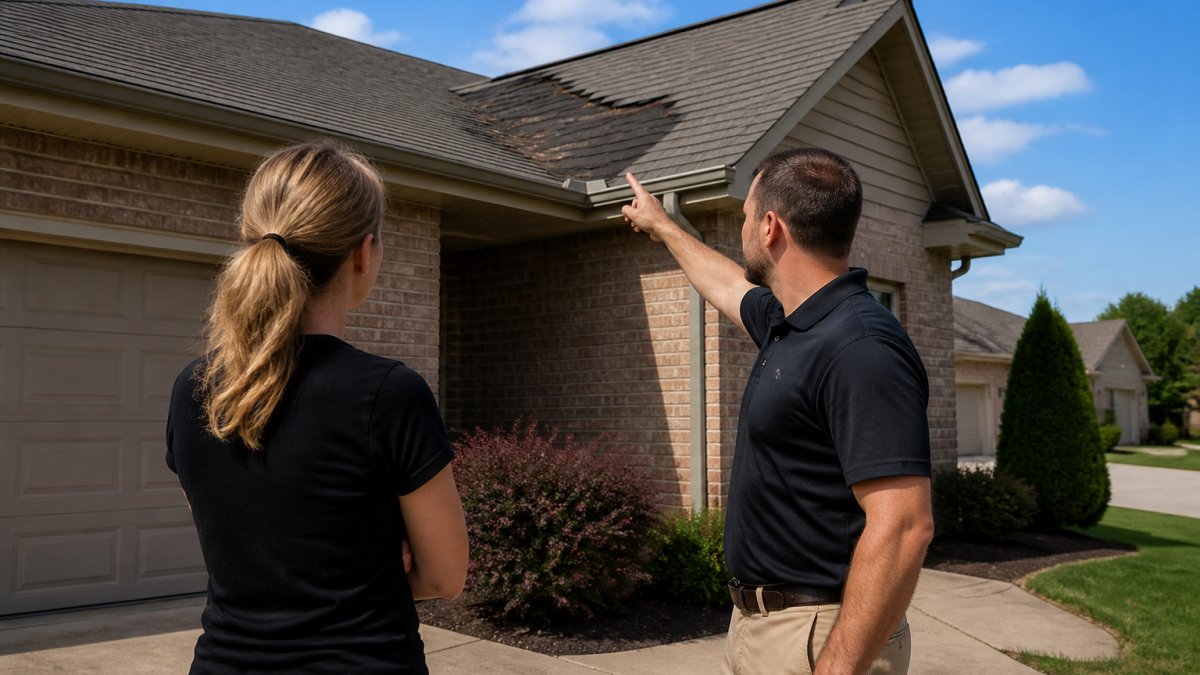
Start with neighbors who had work done after the last storm. Ask who they called, whether the crew cleaned up, and if the final invoice matched the written estimate.
Below is the process we would follow if it were our own house:
- Gather three to five names from neighbors, your insurance agent, and local review sites.
- Check each company's license, insurance certificate, and local registration.
- Request a free inspection and a written estimate from at least three.
- Compare scope, materials, and warranty terms line by line, not just the total.
- Ask for proof of workers' compensation coverage before signing anything.
What a Roof Repair Estimate Should Include
A legitimate roof repair estimate itemizes materials, labor, tear-off and disposal, and the specific areas being repaired. If your estimate is one line that says "repair roof, $X," ask for a rewrite before comparing it to anything else.
Here is what belongs on the page:
- Scope of work in plain language: which slope, how many squares, what gets replaced.
- Materials by name and grade, including shingle brand and underlayment type.
- Tear-off and disposal costs, listed separately from installation.
- Decking repair allowance, since rotten sheathing is often found after tear-off begins.
- Flashing and penetration work around chimneys, vents, and skylights.
- Warranty terms, split into manufacturer coverage and workmanship coverage.
- Payment schedule tied to milestones, never a large deposit upfront.
- Cleanup and final inspection commitments.
Ask whether the estimate is firm or subject to change once the roof is opened. A common mistake is accepting a low bid that excludes decking, then paying far more when hidden rot appears. Get the per-sheet decking rate in writing before work starts.
What Actually Drives the Price
Two estimates for the same repair can differ by thousands of dollars, usually because of a handful of variables rather than markup:
- Roof pitch and access. A steep slope or a roof hemmed in by landscaping takes longer and requires more safety equipment than a walkable low-slope roof.
- Number of layers. Tearing off two or three old layers costs more in labor and disposal than a single layer.
- Decking condition. Replacing sheathing is priced per sheet, and the total depends on how much rot is found once the shingles come off.
- Material grade. Architectural shingles cost more than three-tab, and premium underlayment and ice-and-water shield add to the material line.
- Penetrations and flashing. Chimneys, skylights, and multiple vents add detail work that is easy to leave out of a low bid.
- Permits and inspections. Some jurisdictions require a permit for re-roofing, and the fee and inspection time belong in the estimate.
- Season and scheduling. Demand after a storm can push labor pricing up, and emergency or weekend work usually carries a premium.
Compare estimates line by line against that list. A bid that is lower because it omits decking, flashing, or permit costs is not actually lower, it is incomplete. Ask each contractor to quote the same scope.
What a Fair Payment Schedule Looks Like
A deposit is normal, but a large upfront payment before any material is delivered is a red flag. A defensible structure ties payments to milestones: a modest deposit to order materials, a progress payment after tear-off and dry-in, and the balance after final inspection and cleanup.
A free roofing consultation should include an actual inspection, material guidance, and straightforward pricing. If a company wants to quote your roof from the driveway without getting on it or sending a drone up, keep looking. A "today only" discount is a reason to slow down.

Roof Repair vs. Replacement: Which Do You Need?
Repair is usually right when damage is isolated: a few missing shingles after wind, a single leak around a vent, or flashing that failed at one chimney. Replacement makes more sense when the roof is near the end of its service life, damage covers multiple slopes, or the same leak keeps returning.
Use these criteria to decide:
| Situation | Likely Path | Why |
|---|---|---|
| A handful of damaged shingles after a storm | Repair | Isolated damage, shingles still pliable |
| One persistent leak at a vent or chimney | Repair | Flashing failure, not a roof-wide problem |
| Granules in gutters, curling shingles across slopes | Replacement | Material is at end of life |
| Damage on three or more slopes | Replacement | Repair cost approaches replacement value |
| Active leak into living space | Urgent repair, then assess | Water intrusion causes rapid interior damage |
The Three Questions That Decide It
Three questions decide the path:
- How much service life is left? Asphalt shingles are commonly rated for about 20 to 30 years depending on grade, and a roof past roughly two-thirds of its rated life is a poor candidate for repeated repairs. If the roof is 20 years old and the shingles are curling, a repair buys months, not years.
- How much of the roof is affected? Damage confined to one slope or one penetration is a repair. Damage spread across multiple slopes or the whole field usually points to replacement, because the labor to tear off and match materials approaches the cost of a new roof.
- What is the repair history? One repair in ten years is normal. Three repairs in three years at the same spot means the underlying problem, bad flashing, poor ventilation, or a failing underlayment, was never fixed, and another patch will not solve it.
A useful rule of thumb: if a repair costs a large fraction of a replacement and the roof is in its back half of service life, replacement is the better long-term value. Ask the inspector to show you the numbers.
Age Is Not the Whole Story
A twelve-year-old roof that has never leaked may have years left, while a newer roof over bad ventilation can fail early because trapped heat and moisture degrade shingles from below. Ask the inspector for photos of granule loss, flashing, and attic decking, attic photos reveal stained decking, daylight through the sheathing, and condensation.
Get the Justification in Writing
Whichever path you choose, ask the contractor to put the reasoning in writing: what was inspected, what was found, and why repair or replacement is recommended. Your insurer will want that justification if you file a claim.
Questions to Ask a Roofing Contractor Before You Sign
These questions separate a professional roofer from a sales operation, and they take ten minutes on the phone. Ask before anyone visits your home.
- What is your state license number, and can I see your insurance certificate?
- Who will actually be on my roof, your employees or a subcontractor crew?
- Will you pull the permit, and is it included in this price?
- What does your workmanship warranty cover, and for how many years?
- How do you handle decking that turns out to be rotten?
- What is your cleanup process, and do you use a magnetic sweep for nails?
- How long has your company worked in this county?
- Can you provide three recent local references I can call?
Ohio's contractor licensing requirements through the Ohio Construction Industry Licensing Board cover specialty trades, and your county or municipality may require separate registration. Confirm both before work begins.
Pay attention to how they answer. A contractor who hesitates on insurance or brushes off the permit question is telling you something.
How to Read Roofing Contractor Reviews
Reviews are useful when read correctly. Look for patterns across many reviews rather than reacting to one glowing or angry post. A company with a hundred reviews and a consistent theme about clean job sites and on-time crews is a safer bet than one with five perfect reviews posted in the same week.
What to look for:
- Specific detail. Reviews that mention a crew leader by name, a particular repair, or a timeline are more credible than generic praise.
- Owner responses. A company that replies professionally to criticism, including negative reviews, shows it monitors its reputation.
- Recency. Reviews from the past year tell you how the company operates now.
- Photo evidence. Homeowners who post before-and-after photos are harder to fake.
- Complaint themes. Repeated mentions of cleanup problems, surprise charges, or no-shows are a pattern, not bad luck.
Check the Better Business Bureau's guidance on checking a contractor's complaint history alongside Google and Facebook reviews. Cross-reference the company name against your state's attorney general consumer complaint database too. One bad review is noise. The same complaint five times is a warning.
Licensing, Insurance, and Warranty Checks
Verification is the step homeowners skip, and it protects you most.
General liability insurance covers damage to your home if a crew member drops a bundle through the deck. Workers' compensation covers injuries to workers on your property.
Call the insurer listed on the certificate to confirm the policy is active and coverage is adequate, certificates can be forged or expired, and a two-minute call closes that gap.
Warranty deserves the same scrutiny. Ask for the manufacturer's written warranty and the contractor's workmanship warranty as separate documents, and read the exclusions.
Storm Damage, Emergency Service, and Insurance Claims
Storm damage follows a predictable pattern, and so does the claims process. After hail or high wind, inspect from the ground with binoculars for missing shingles, dented gutters, and granule piles at downspouts, then call your insurer before signing anything with a contractor.
Document everything: date-stamp photos of each damaged area, a written inventory of interior damage, and any receipts for emergency tarping.
Most homeowner policies cover sudden storm damage but not wear and tear or lack of maintenance.
Emergency service matters when water is entering the home. A reputable company will tarp the affected area quickly and schedule permanent repair after the storm passes.
For more on what insurers expect, the Insurance Information Institute's guide to homeowners insurance claims walks through the documentation standard adjusters apply.
Frequently Asked Questions
Are roof repair estimates free?
Most local roof repair companies offer free inspections and written estimates, and free is the standard you should expect. Dunn Wright's Exteriors provides free roofing consultations that include an inspection, material guidance, and straightforward pricing with no pressure. Ask upfront whether the visit includes getting on the roof or just a driveway look, and request the findings in writing so you can compare bids line by line.
How do I find a reliable roof repair company near me?
Start with neighborhood recommendations and local reviews, then verify credentials before you call. Confirm the company is licensed and insured, ask for its service area, and check customer ratings across more than one platform. Request a written roof repair estimate with materials named, and get at least two bids. A roofer who answers questions about licensing, warranty terms, and cleanup without hesitation is usually the safer hire.
How can I tell whether my roof needs repair or replacement?
Age, damage extent, and leak history decide it. A roof under 15 years old with isolated missing shingles or a small leak is usually a repair candidate. Widespread granule loss, curling shingles, sagging, or repeated leaks point toward replacement. Get a damage assessment from a professional roofer and ask for both numbers so you can weigh the roof repair vs. replacement decision on real costs rather than guesswork.
What should I look for when comparing roof repair estimates?
Compare scope, not just the bottom line. A solid estimate names the roofing materials and shingle brand, lists the square footage and repair approach, states the warranty, and includes cleanup and disposal. Watch for vague line items like 'miscellaneous repairs' and bids that skip the damage assessment. A written estimate from a licensed, insured contractor with clear terms beats a cheaper verbal quote every time.